

The gaming industry has faced significant challenges with layoffs, studio closures, and dwindling funding. Enrique Fuentes, CEO and co-founder of Teravision Games, felt these pressures firsthand after launching Killer Klowns From Outer Space, an asymmetrical horror game inspired by the 1980s film. Despite positive reviews (IGN rated it 7, praising its "silly and entertaining" vibe) and trailers garnering hundreds of thousands of views, the studio struggled to secure its next project post-launch, a common plight in the industry.
“2024 was a tough year for the gaming sector, and finding our next project was slow,” Fuentes explains. Despite collaborations with major brands like Disney, Nickelodeon, and Xbox, Teravision faced hurdles in lining up new work. With time running short, the studio, backed by 20 years of industry expertise, pivoted to a bold new venture: developing games within Fortnite. In under a year, Teravision released three Unreal Engine for Fortnite (UEFN) titles, with their fourth, launched today, leveraging The Walking Dead’s official content pack in UEFN.
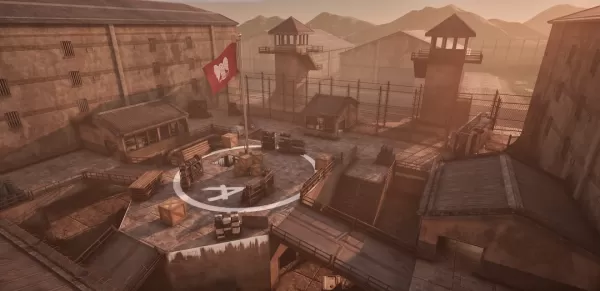
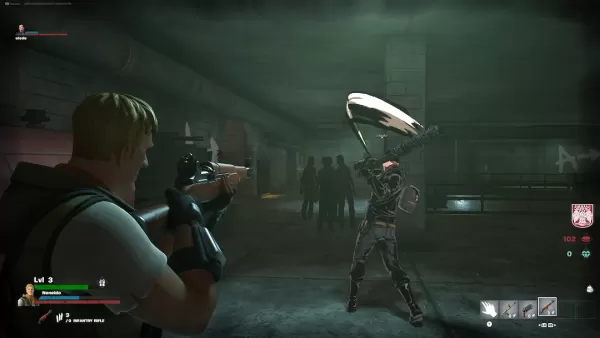
In collaboration with Skybound, co-founded by The Walking Dead creator Robert Kirkman, Teravision’s latest UEFN project, Courtyard King, is a King of the Hill-style multiplayer PvPvE game. Players battle each other and NPC zombies to control territory in the iconic prison from The Walking Dead.
Courtyard King uses official UEFN assets, including character models of Rick Grimes, Negan, and Daryl Dixon. Beyond assets, Teravision partnered with Skybound’s writers to shape the game’s narrative and dialogue.
“Unlike multi-year projects like Killer Klowns, these are initiatives we can complete in weeks or months,” Fuentes notes. “We’ve worked with major brands before, but UEFN was an experiment. We never expected it to lead to a partnership with a company like Skybound.”
User-generated content (UGC) is a major trend in gaming, fueled by platforms like Fortnite. While UGC typically refers to player-created content, professional studios like Teravision are now embracing it. Fortnite’s Unreal Engine 5-based tools suit experienced developers, enabling rapid experimentation.
“Our engineering background made UEFN a natural fit,” Fuentes says. “Instead of multi-year endeavors, we can create projects quickly, taking on manageable risks.”
Teravision’s efforts led to Havoc Hotel, a roguelike shooter where players battle through hotel floors, earning currency for stronger weapons with each level cleared. The first Havoc Hotel gained traction, paving the way for Havoc Hotel 3, now among Fortnite’s top games.
Martin Rodriguez, Teravision’s game designer, notes that transitioning to UEFN from Unreal Engine, used for Killer Klowns, was seamless. UEFN’s streamlined, “drag-and-drop” systems let the team focus on creativity. “It cuts out extra work, allowing us to prioritize better games and explore fresh ideas,” Rodriguez says.
Adapting to UEFN presented unique design challenges. Unlike traditional games, where objectives drive cooperation or competition, UEFN games thrive on less structured, context-driven experiences. LD Zambrano, Teravision’s creative director, explains, “Popular Fortnite games often create unique situations and interactions that don’t rely on clear-cut competition, yet they resonate with players.”
Zambrano likens UEFN games to schoolyard play: “It’s like recess, where you invent games that may not make sense but foster engagement and connection. That’s the context these games provide.”
Courtyard King stands out as an “infinite game,” with no definitive winner. Players can join or leave matches, even switching teams mid-game, creating dynamic scenarios like betrayals that echo The Walking Dead’s themes.
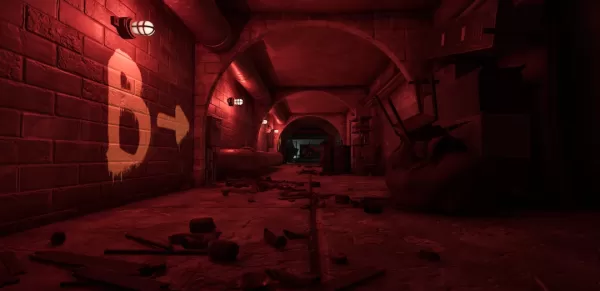
“Players can drop in or out and switch teams freely, sparking betrayals—very true to The Walking Dead,” Zambrano says.
Is this the future for game developers? While it places studios in the ecosystems of giants like Epic Games, it offers access to large audiences and major IPs like The Walking Dead. Fuentes sees significant potential: “UEFN lets indie developers like us take risks. Last year, a three-year project was unthinkable. Now, we can create in weeks with a small team, sustaining an 80-person studio. With the right ideas and market understanding, execution is achievable in months, not years—a dream for indie devs.”
 Latest Downloads
 Downlaod




 Top News






![A Father’s Sins – Going to Hell [Ch. 7 Public] By Pixieblink](https://imgs.34wk.com/uploads/67/1719578270667eae9eb6a75.jpg)