
When I first sat down to experience MercurySteam's latest project, Blades of Fire, I anticipated a nostalgic return to the studio's roots with the Castlevania: Lords of Shadow games, infused with the contemporary flair of God of War. However, after an hour of gameplay, I found myself immersed in what felt like a Soulslike experience, albeit one where the focus was on weapon stats rather than traditional RPG character development. By the conclusion of my three-hour hands-on session, I realized that Blades of Fire is a unique blend of familiar elements and innovative concepts, carving out a fresh and compelling approach to the action-adventure genre.
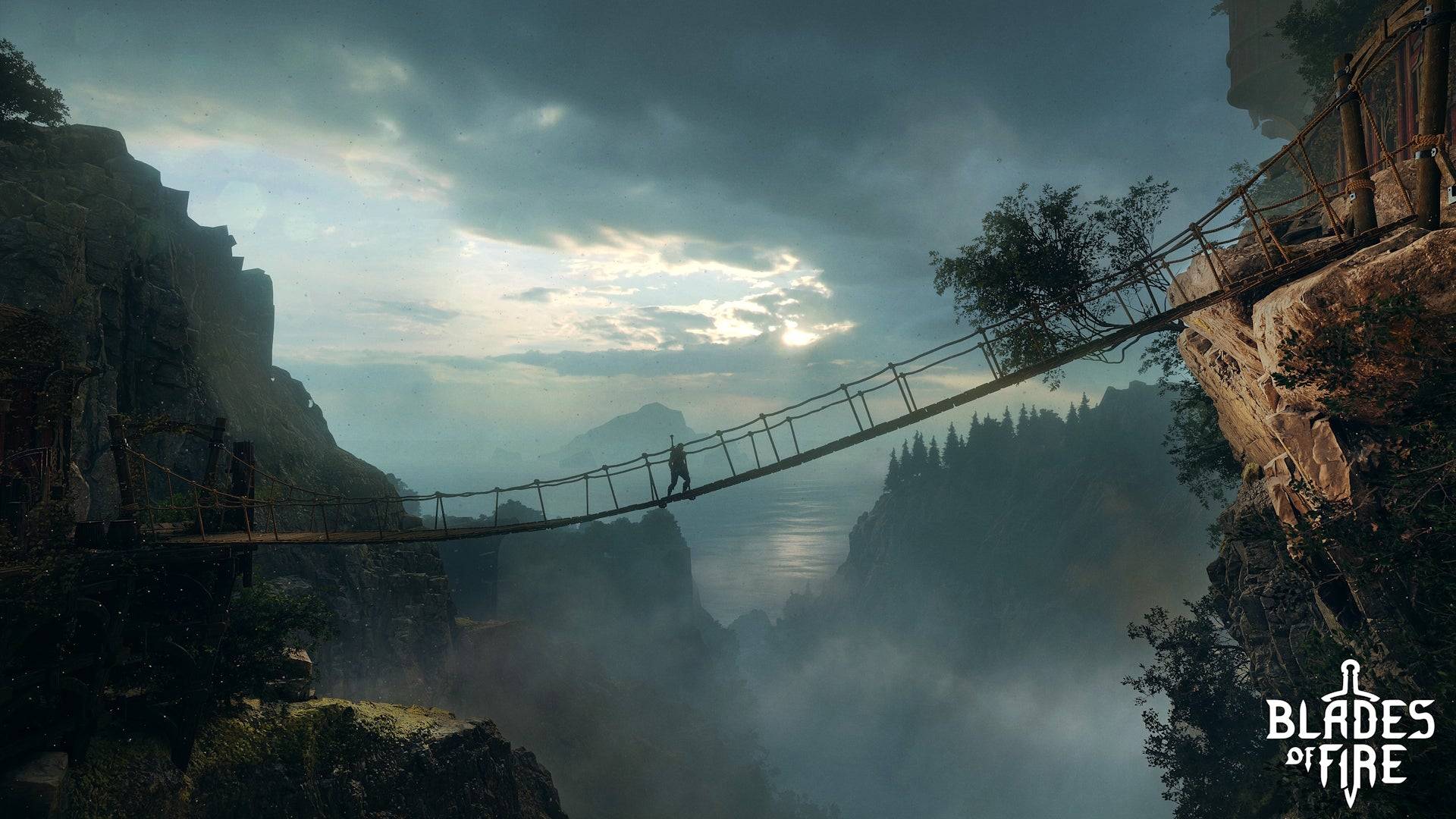
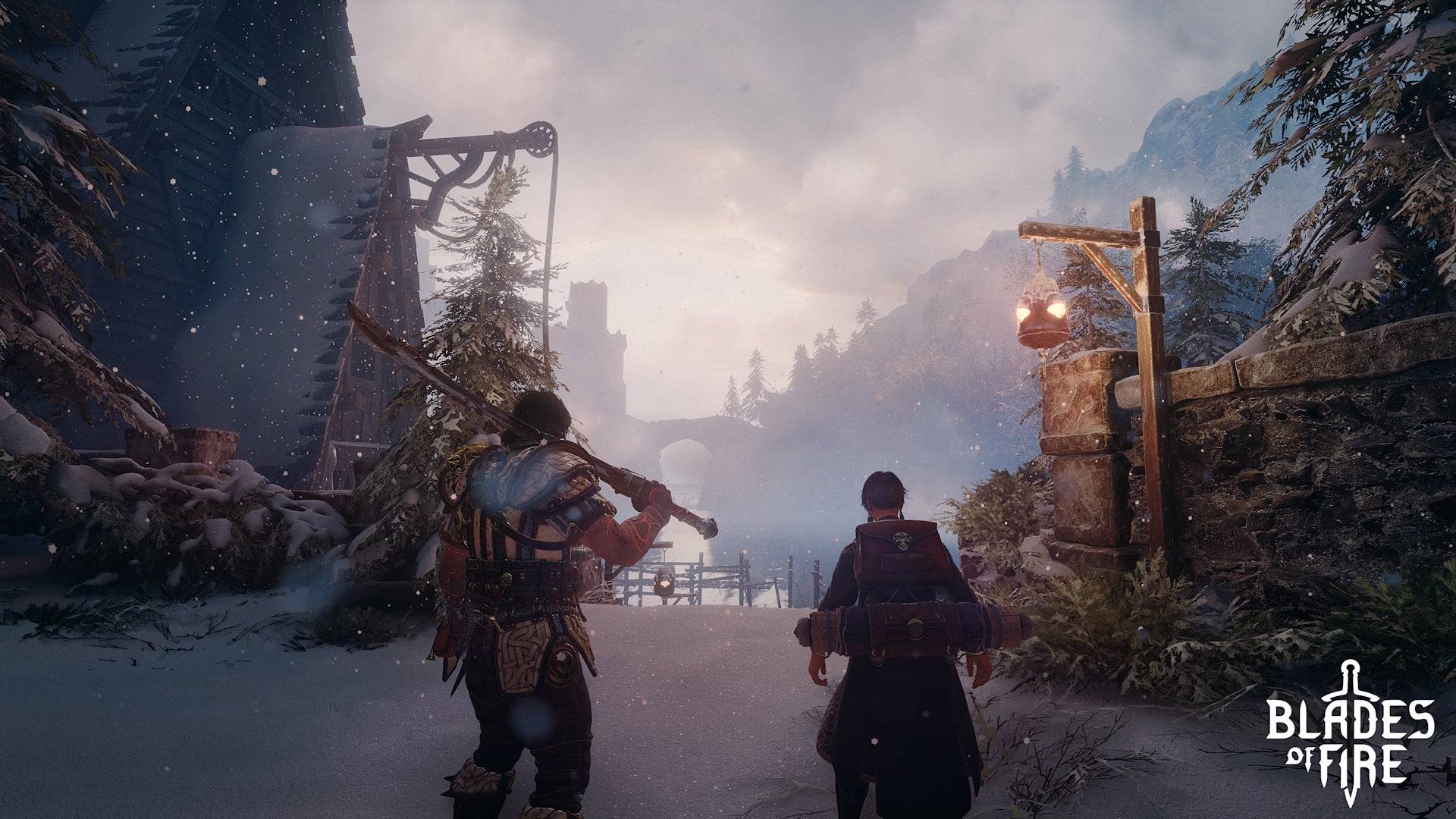
At a glance, it's easy to mistake Blades of Fire for a direct descendant of Sony Santa Monica's God of War, with its dark fantasy setting, impactful combat, and a third-person camera that keeps you close to the action. The game shares many similarities with Kratos' Norse adventures, including exploring a winding map filled with treasure chests alongside a young companion who assists in puzzle-solving. Our journey led us to seek a woman of the wilds living in a house atop a giant creature. Yet, the game also borrows heavily from FromSoftware's playbook, with anvil-shaped checkpoints that not only replenish your health potions but also respawn enemies, adding a familiar yet distinct flavor to the experience.
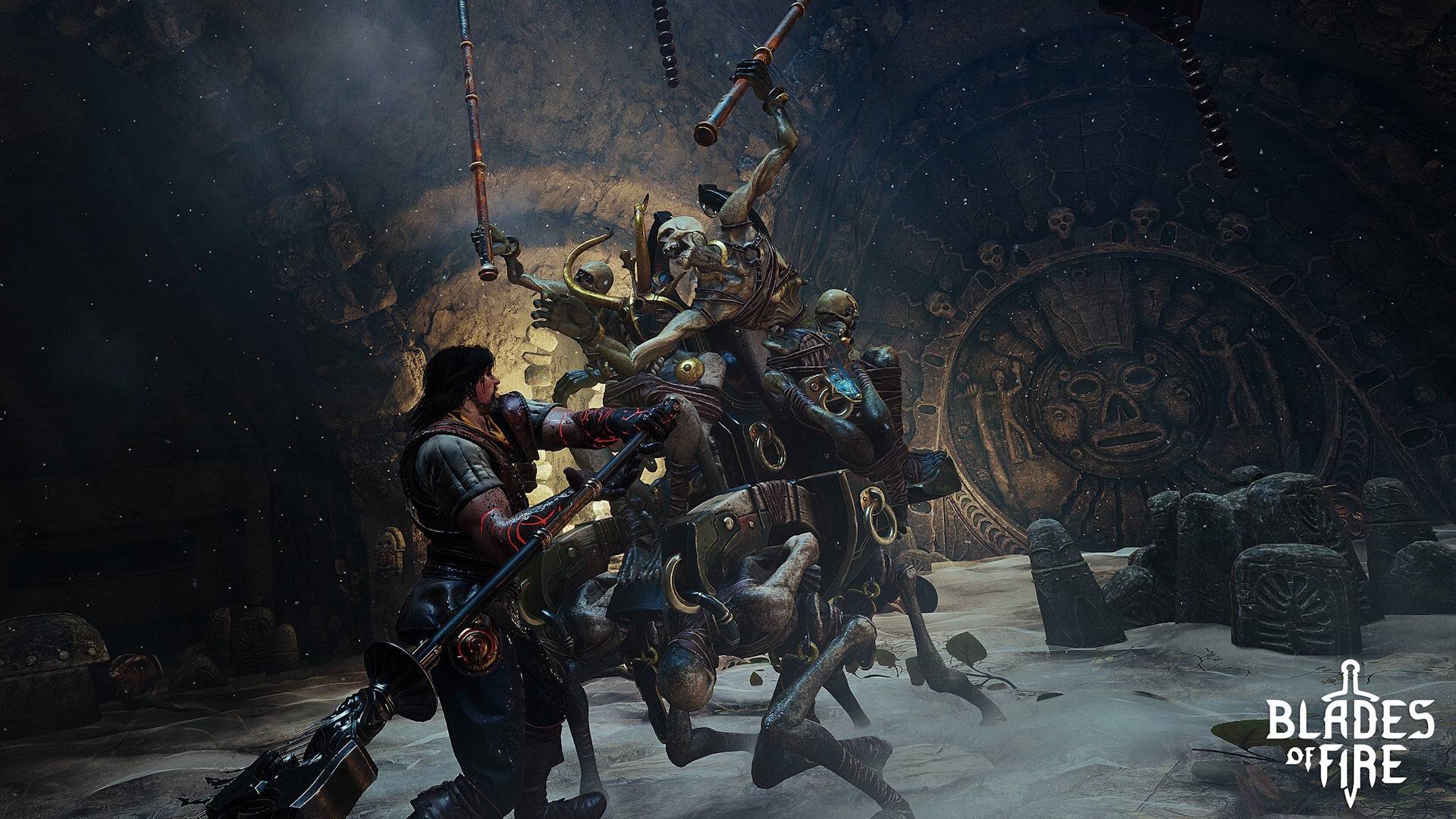
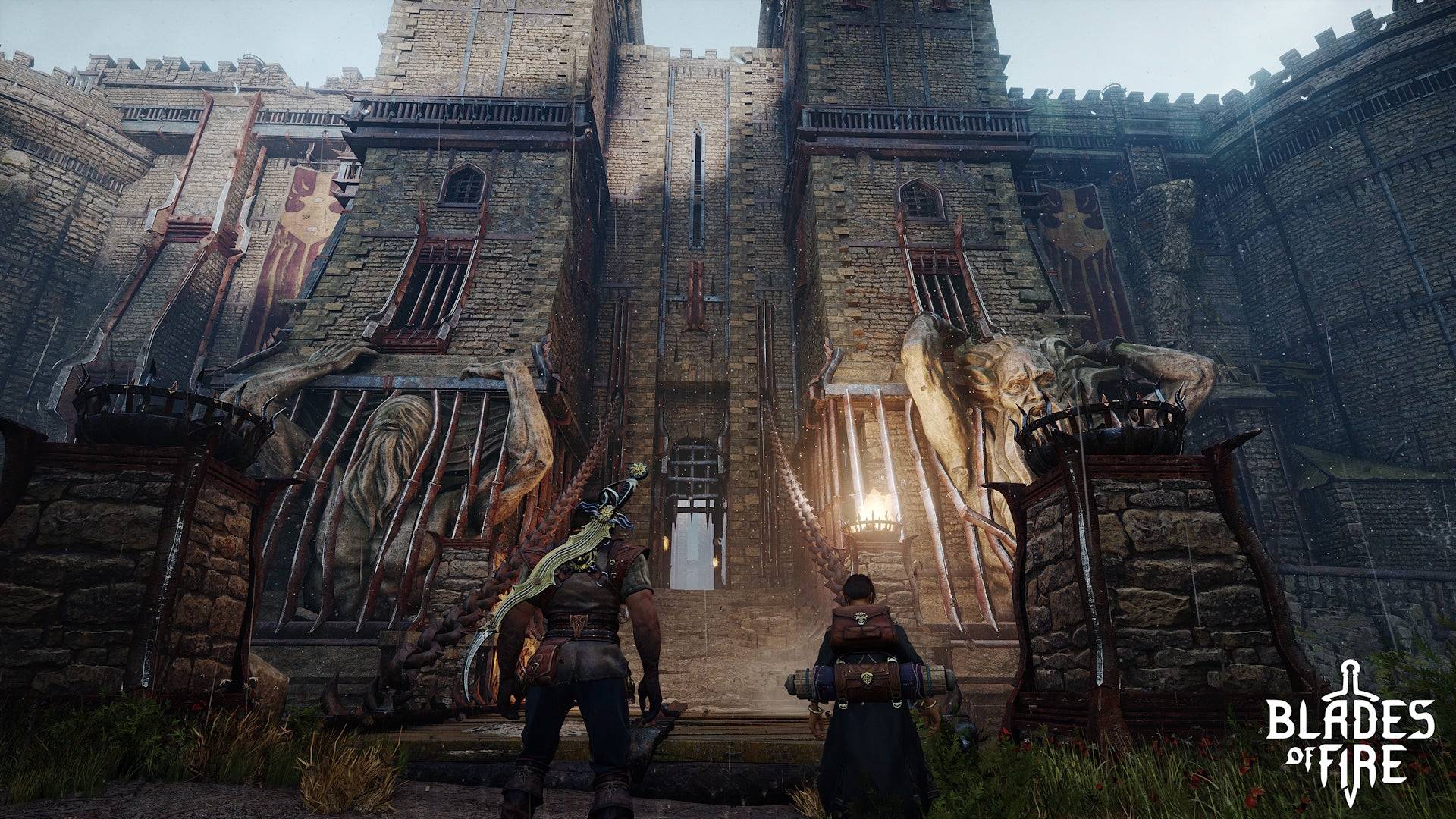
The world of Blades of Fire evokes a sense of 1980s fantasy, where characters like Conan the Barbarian would fit right in among its muscular soldiers, and enemies reminiscent of Jim Henson's Labyrinth bounce around on bamboo pogo sticks. The narrative also has a retro feel, centered around an evil queen who has turned steel into stone, and your character, Aran de Lira—a blacksmith demigod—must defeat her to restore the world's metal. While the setting and premise have a nostalgic charm, the story, characters, and writing might not stand out as particularly engaging, reminiscent of many overlooked tales from the Xbox 360 era.
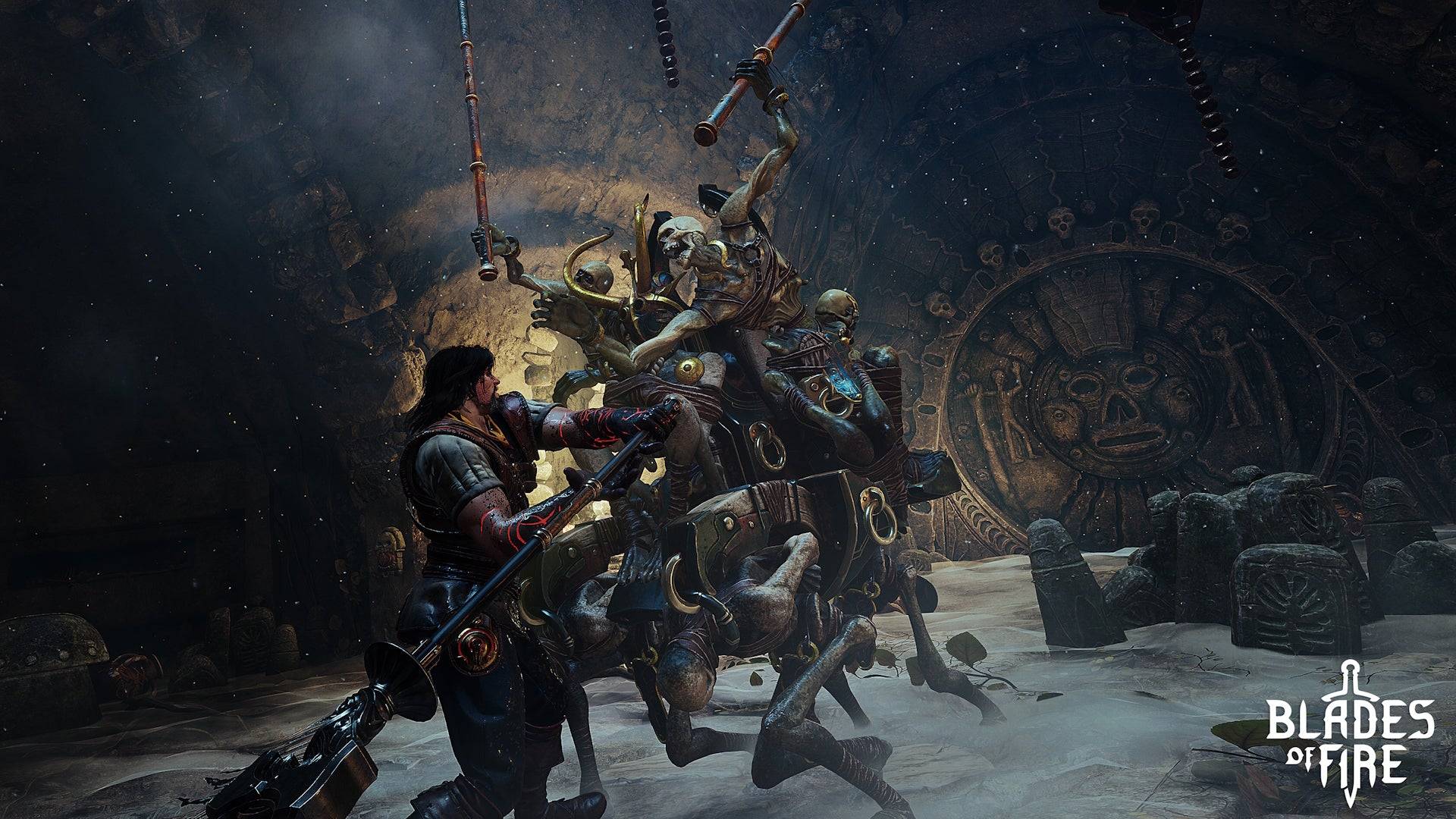
Blades of Fire truly shines in its mechanics. The combat system is built around directional attacks, utilizing every face button on the controller. On a PlayStation pad, for instance, triangle targets the head, cross the torso, and square and circle swipe left and right. This system requires careful observation of enemy stances to break through defenses effectively. A soldier protecting their face can be defeated by aiming low and striking their gut, with the impact resulting in satisfyingly visceral visuals.
The combat system reaches its peak during encounters like the first major boss fight against a slobbering troll. The troll's second health bar can only be damaged after dismembering it, with the limb removed depending on your attack angle. A right-hand strike can sever its left arm, effectively disarming it, while a well-placed attack can remove its face, leaving it blind and flailing until it regenerates its eyes.
Weapons in Blades of Fire are central to gameplay, requiring constant attention. They dull with use, reducing damage over time, necessitating the use of sharpening stones or switching stances, as the edge and tip wear independently. This mechanic adds a tangible feel to the weapons, reflecting your combat style's impact on their condition. Similar to Monster Hunter, you'll need to find moments to sharpen your weapon during combat, while a durability meter ensures that even well-maintained weapons will eventually break, requiring repairs or crafting at an anvil checkpoint.
Blades of Fire Screenshots
 9 Images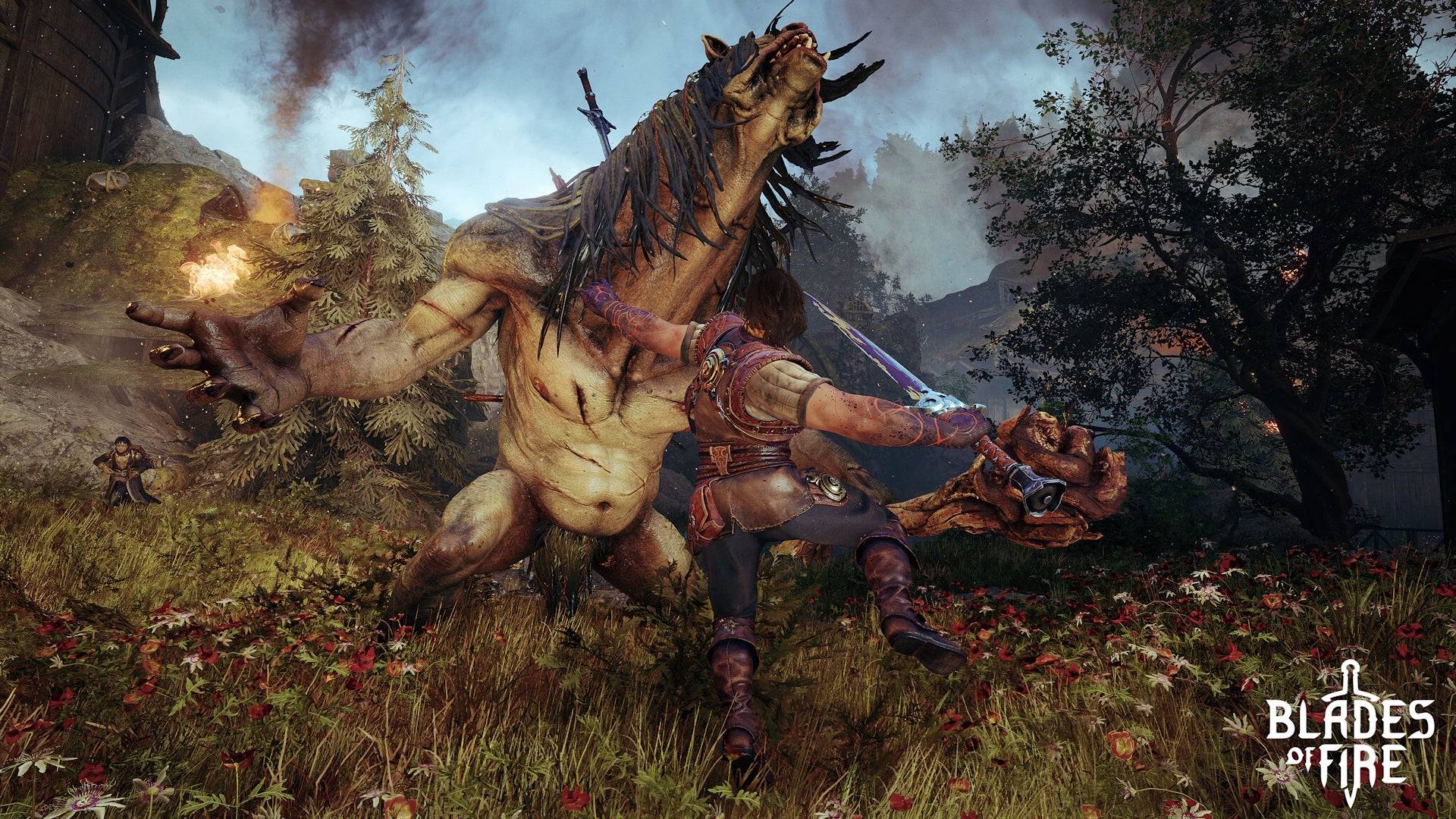
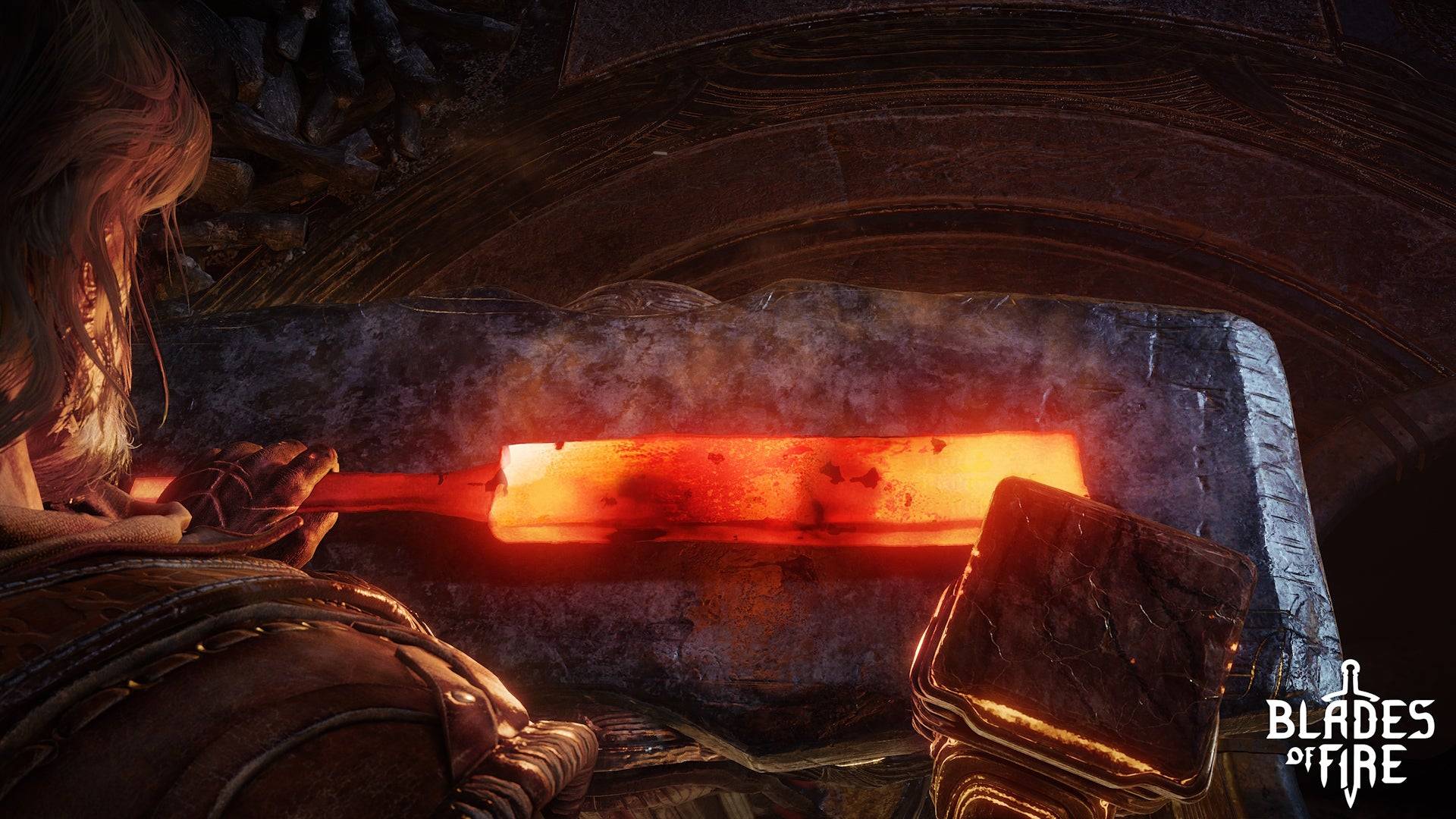
The game's most innovative feature is its extensive weapon crafting system. Rather than discovering new weapons, every blade's journey begins in the forge. Aran sketches out a basic weapon template on a chalkboard, which you can then modify. For example, when crafting a spear, you can adjust the pole's length and the spearhead's shape, affecting the weapon's stats and performance. The choice of materials also impacts weight and stamina demands, enhancing the sense of crafting a personalized weapon. You even get to name your creation, deepening your connection to it.
However, the crafting process doesn't end there. You must physically hammer out the metal on an anvil in a detailed minigame, controlling the length, force, and angle of each strike. A curved line represents the ideal shape, and your goal is to match it with as few strikes as possible, as overworking the steel weakens the weapon. Your efforts are rated with stars, which determine how many times you can repair the weapon before it's lost forever.
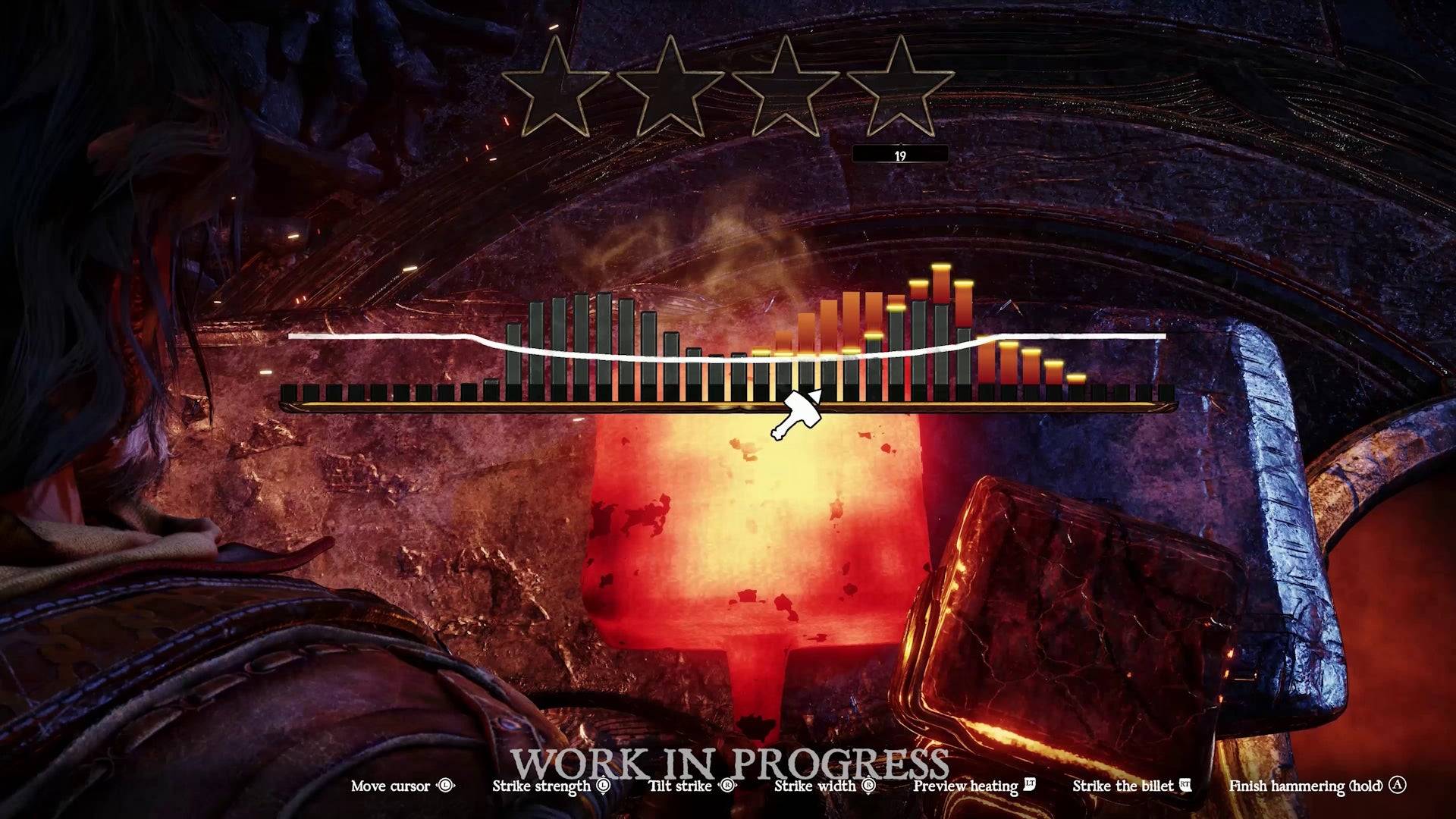
While the forge concept is brilliant, adding a skill-based element to crafting, the minigame can be frustratingly unclear. The connection between strikes and the resulting metal shape isn't always evident, and a better tutorial or improvements could enhance this feature significantly.
MercurySteam's vision for Blades of Fire extends beyond the demo, aiming to foster a deep attachment to your crafted weapons over a 60-70 hour journey. As you explore and find new metals, you can reforge your weapons to meet new challenges, enhancing their properties. The death system underscores this bond; upon defeat, you drop your weapon and respawn without it, but it remains in the world, challenging you to recover it. This mechanic, inspired by Dark Souls, emphasizes the irreplaceable nature of your crafted blades.
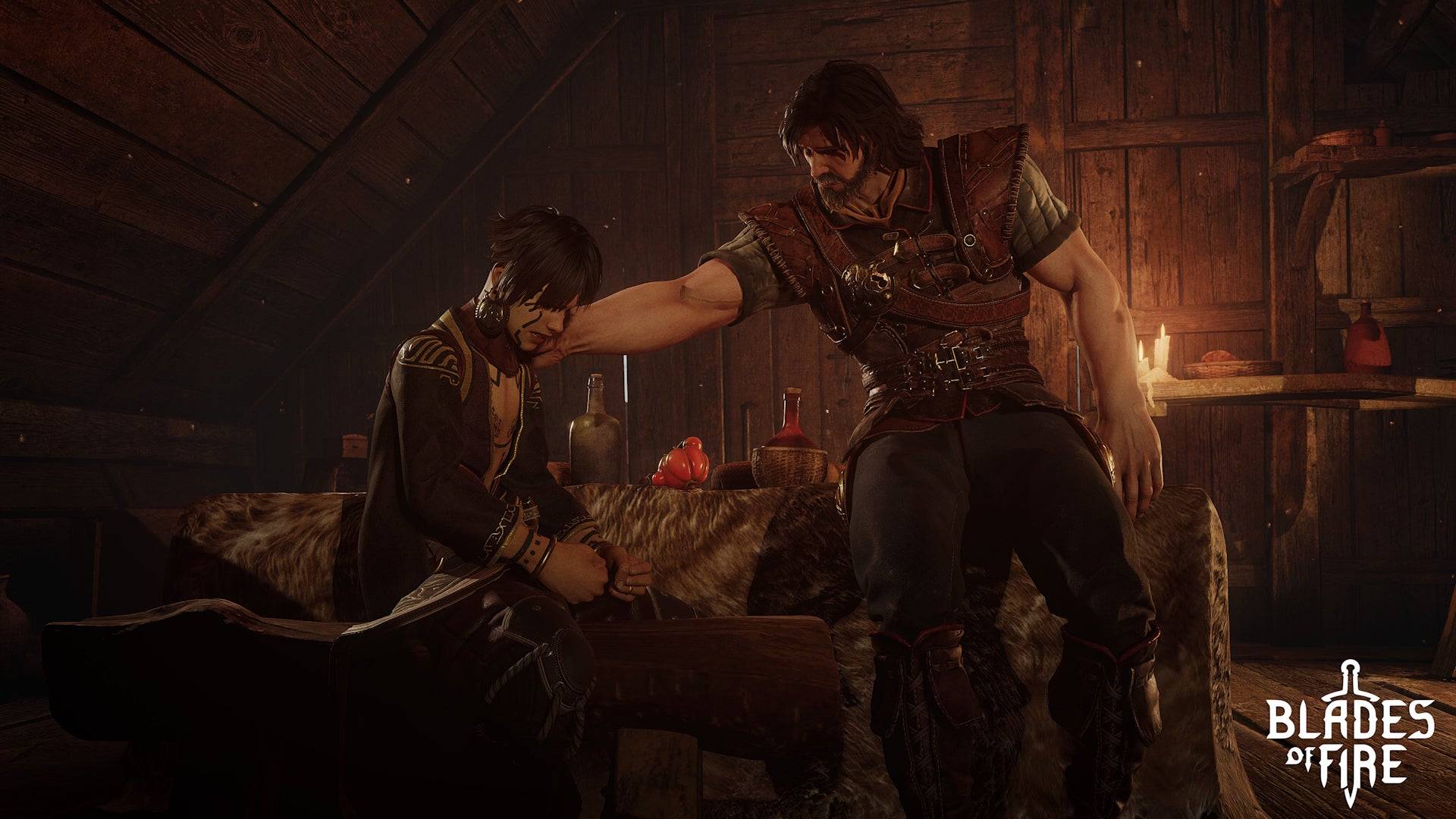
MercurySteam's influences are evident, from the brutal combat of their early work, Blade of Darkness, to the innovations of FromSoftware and the world design of God of War. Yet, Blades of Fire stands on its own, reinterpreting these established systems into a unique tapestry of ideas. While the generic dark fantasy setting and repeated encounters with the same miniboss raise concerns about the game's variety and ability to sustain a 60-hour adventure, the deep relationship between your crafted weapons and the enemies you face holds immense potential.
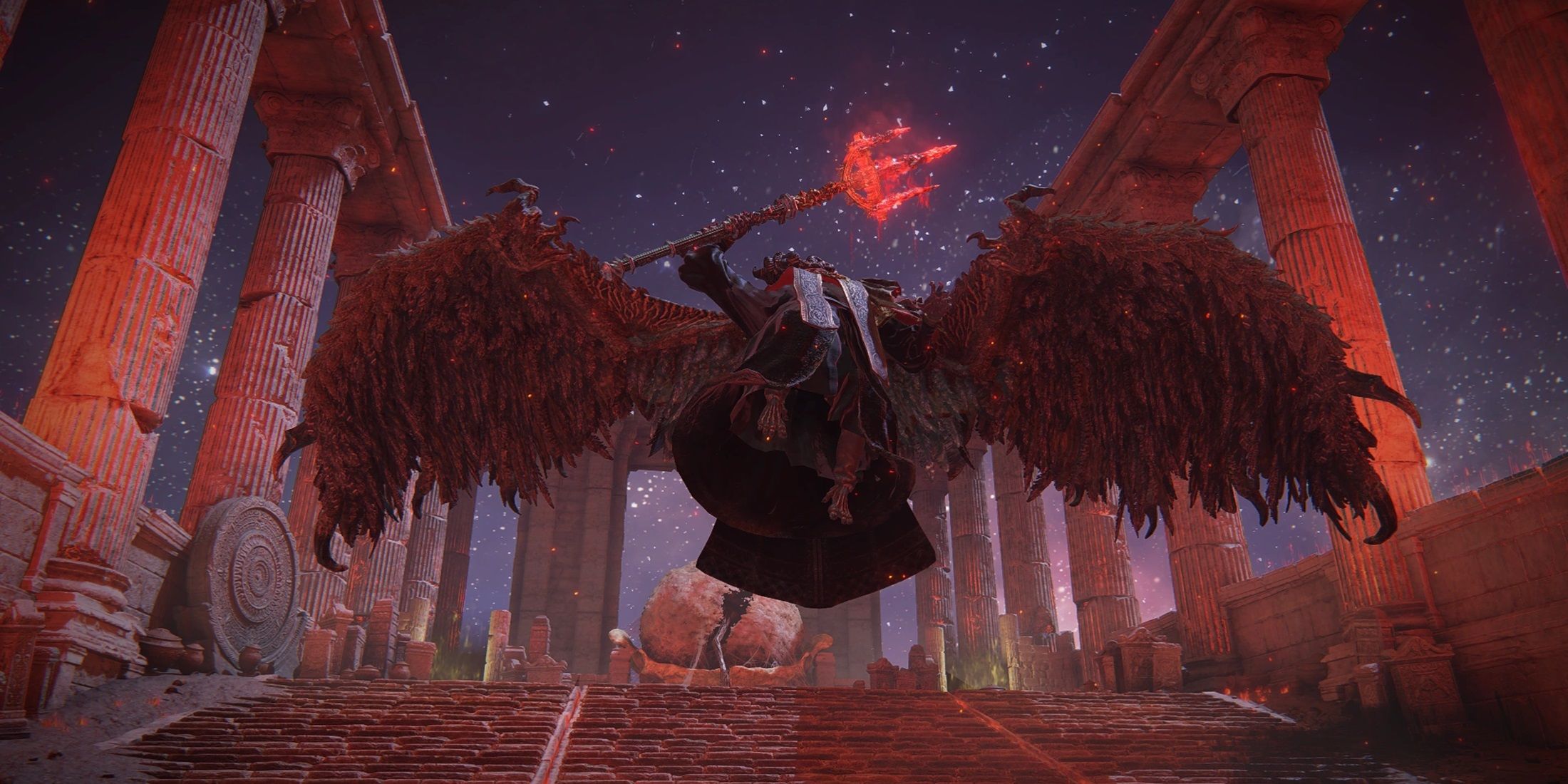
In an era where complex games like Elden Ring and Monster Hunter have found mainstream success, Blades of Fire has the opportunity to offer something truly fascinating to the gaming landscape.
 Latest Downloads
 Downlaod




 Top News