
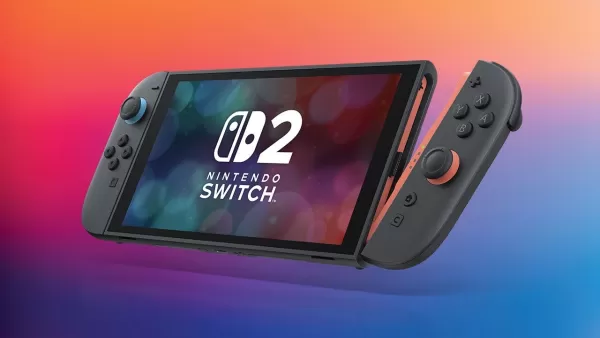
Nintendo's highly anticipated Switch 2 Direct presentation wrapped up in early April on an uncertain note. The showcase dazzled fans with impressive new features and a robust lineup of upcoming games, but conspicuously omitted one crucial detail—the price tag. Concerns about a steep price increase were soon validated when Nintendo revealed on its newly launched Switch 2 website that the console would retail for $449, marking a $150 jump from the original Switch's $299 launch price. Alongside frustration over Nintendo's lack of upfront pricing came worries about the console's market viability, especially after Mario Kart World—the Switch 2's marquee launch title—was confirmed to cost $80.
For some Nintendo fans, still haunted by the Wii U era, pessimism took hold immediately. Many feared the Switch 2's premium pricing would drastically shrink its potential audience, plunging the company into another downturn. Would gamers really pay $450—nearly matching PlayStation 5 and Xbox Series X costs—for hardware lagging behind current-gen specs? These doubts were quickly dispelled, however, when Bloomberg reported projections of the Switch 2 becoming the best-selling console launch ever, with estimates of 6-8 million units sold. That figure would smash records previously held by the PS4 and PS5 (4.5 million units each). Despite sticker shock, demand for the Switch 2 appears undeniable—a predictable outcome given the track record of successful console launches.
Ironically, Nintendo's most notorious failure reveals why the Switch 2 will succeed. The Virtual Boy, launched two decades ago, remains the company's sole foray into virtual reality. While VR's sci-fi allure endures—proven by today's thriving adoption—1995's technology was woefully inadequate for mainstream use. The Virtual Boy fell far short of cutting-edge: requiring tabletop placement, forcing users into awkward postures to peer into its blood-red display, and reportedly causing headaches. Players quickly realized this wasn't Star Trek-caliber immersion—just uncomfortable, underdeveloped tech that consumers rejected.
The Switch 2 shares no resemblance to the Virtual Boy's failures. Instead, it echoes the Wii's triumph—delivering polished motion controls that reinvigorated gaming audiences. The Wii revolutionized play mechanics and expanded gaming's demographic reach, appearing equally in nursing homes and children's bedrooms. The enduring legacy of Wii innovations ensures motion controls remain integral to Nintendo's ecosystem, still delivering unmatched precision in titles like Pikmin and Metroid Prime.
Crafting must-have consoles isn't unique to Nintendo—Sony's PlayStation 2 dominated living rooms by doubling as a DVD player. But when Nintendo nails execution, the results redefine markets. The original Switch's seamless hybrid functionality blurred boundaries between handheld and home consoles—an enduringly popular innovation few players would abandon today. While criticized for performance limitations (and Joy-Con drift), Nintendo now addresses power concerns confidently. Though less revolutionary than its predecessor, the Switch 2 delivers precisely what fans crave.
The Switch 2's positioning reflects competitors' flagship pricing—this isn't Nintendo charging premiums.
However, compelling hardware alone guarantees nothing. The Wii U's disastrous launch underscored another critical factor: killer software. Debuting with New Super Mario Bros. U—the fourth iteration in six years of stagnant gameplay—failed to justify the hardware. Similarly, despite eventual Switch ports revitalizing Wii U titles like Tropical Freeze and 3D World, their initial releases felt uninspired. Players bought Wiis for Wii Sports, Switches for Breath of the Wild, and DS systems for Super Mario 64 DS. The Wii U lacked this decisive spark—more deadly than its quirky tablet design.
The Switch 2 avoids this pitfall completely. It inherits Nintendo's strongest back-catalog while introducing transformative software experiences. Mario Kart World isn't merely iterative—it dismantles franchise conventions with Forza Horizon-inspired open-world racing. One month post-launch brings the first 3D Donkey Kong game since 1999—channeling Super Mario Odyssey's magic—followed by a 2026 exclusive FromSoft title evoking Bloodborne vibes. Nintendo gives gamers zero reasons to skip this generation.
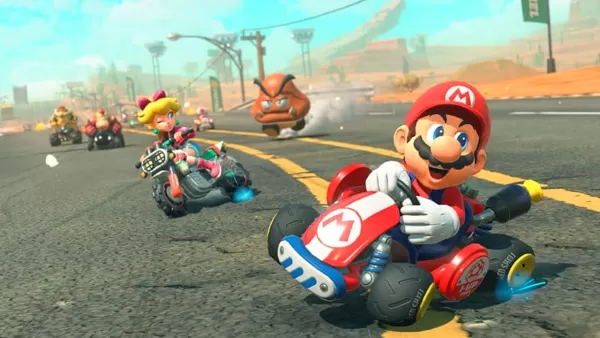
While affordability remains crucial—especially amid global economic pressures—the Switch 2's $449 price mirrors industry standards. Its $499 Mario Kart World bundle matches disc-drive PS5 pricing, while the Xbox Series X occupies similar territory. Though some argue its specs justify Xbox Series S ($380) comparisons, Nintendo's value transcends raw performance metrics.
The PS3 serves as history's clearest example of self-sabotaging pricing—launching at $499/$600 ($790/$950 inflation-adjusted) when $300-$400 was conventional. By contrast, while the Switch 2 commands premium pricing in 2025, it simply meets contemporary expectations rather than breaking them.
Nintendo's industry standing stems from creating benchmark-setting games people gladly pay premiums to play—but with Switch 2, they're not. Priced competitively against PlayStation and Xbox, it delivers sought-after tech packed with must-play software. While escalating game prices may eventually test consumers' limits, Nintendo currently meets—rather than exceeds—established pricing norms. With PlayStation 5 surpassing 75 million sales at comparable prices, market readiness for premium consoles couldn't be clearer.
 Latest Downloads
 Downlaod


 Top News