
The latest Horus Heresy novel has sparked intense debates among Warhammer 40K fans about the Emperor's true state on the Golden Throne, suggesting two iconic early artworks might reveal canonical truths about this pivotal setting.
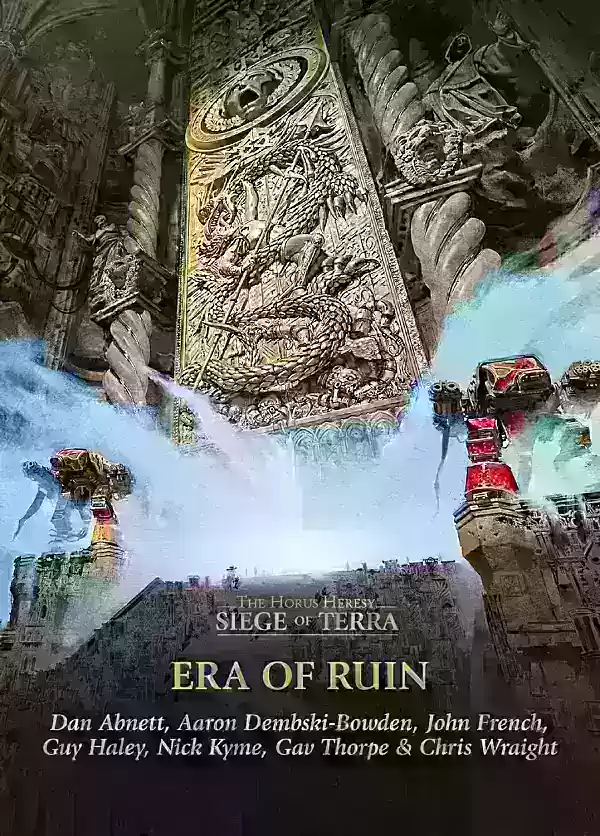
Era of Ruin (whose special edition crashed Warhammer.com during preorders) presents short stories framing the Horus Heresy - the apocalyptic civil war between loyalist and traitor Space Marines millennia before current 40K events. Though the Emperor ultimately defeated his corrupted son Horus Lupercal, victory came at horrific cost: the mortally wounded ruler became a living corpse preserved on the Golden Throne through continuous psychic sacrifices.
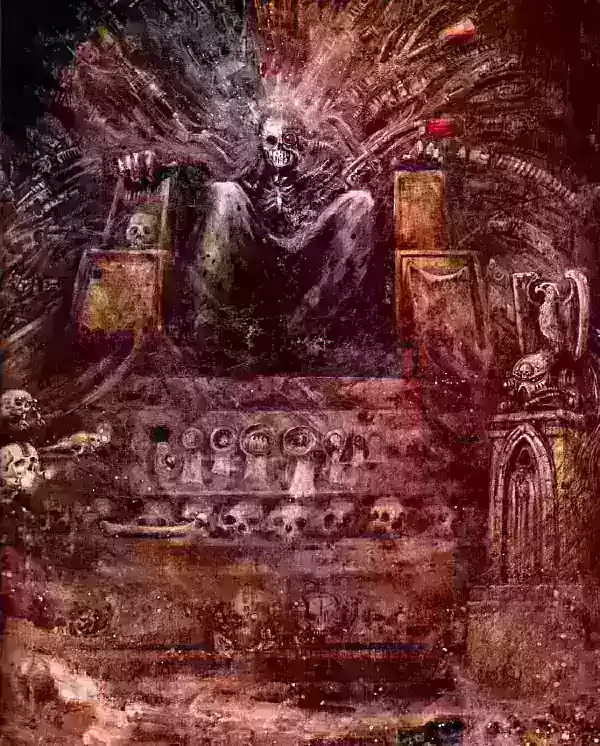
John Blanche's seminal depiction of the God-Emperor remains burned into every Warhammer fan's consciousness - the withered, barely-alive sovereign of the 41st millennium.
But Era of Ruin's concluding story by Aaron Dembski-Bowden provocatively suggests Blanche's famous illustration represents imperial propaganda rather than physical reality.
A pivotal scene follows Custodes officer Diocletian Coros visiting the Emperor centuries post-Heresy. After bypassing security measures including blood-sealed doors, he discovers the truth beneath imperial iconography:
"Past the revered depiction of the Emperor - the skeletal sorcerer on his magnificent throne," the text describes this false imagery before revealing the shocking reality beyond.
The narrative strongly implies Blanche's artwork represents deliberate misinformation - propaganda maintained not for imperial citizens (who haven't accessed these depths for generations), but for the fictional universe's audience.
The revelation escalates as Diocletian enters an organic, spine-like chamber housing the throne's horrifying truth:
Custodes in minimal black armor guard a nightmarish scene - dangling wires like viscera, rhythmic mist sprays, intravenous blood bags sustaining something that barely qualifies as human.
The Emperor emerges as a tormented revenant, psychically engorged yet physically starved, possibly addicted to his gruesome sustenance. This contrasts starkly with Blanche's iconic propaganda image.
Many fans connect this description to early Rogue Trader (1987) artwork showing similar macabre details: blood packs, mist systems, black-helmed Custodes.
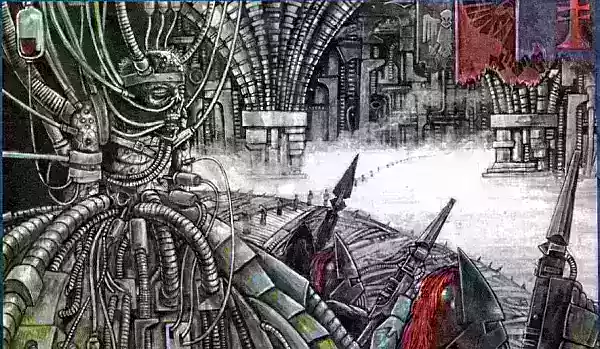
The fandom celebrates this narrative masterstroke making vintage artworks suddenly canonical. Blanche himself has acknowledged his art depicts pilgrims' devotional images, with the "real" Emperor concealed behind machinery-filled chambers.
Esteemed Black Library author Dan Abnett has similarly hinted the throne room might not exist as depicted.
Whether signaling the Emperor's awakening or simply enriching lore, Era of Ruin provides unprecedented clarity about the Golden Throne's gruesome reality while brilliantly integrating classic artwork into current canon.
 Latest Downloads
 Downlaod



 Top News